
Anhedonia
The dopamine deficit state

If you’re reading this, the likelihood is you have a smartphone addiction.
Some days, like millions of other humans, I lack motivation, dread performing basic tasks, and occasionally feel numb or anxious. If you find yourself occasionally feeling those things, or worse yet, find yourself struggling to finish this article… you must read it (If you’re losing focus half-way through, I promise it’s not because I’m a bad writer, I’m only semi-bad).
Cheap dopamine in the form of smartphone’s are, as Naval put it, “The modern devil” [1], but he doesn’t go far enough. As I see it, smartphone use, much like any other addiction, has a layer of shamefulness; most of us don’t admit we have a problem, although upon further internal scrutiny, we know there’s an issue. In this regard, it’s a topic not talked about a) regularly enough b) severely enough. When we discuss epidemics, they’re largely considered to be health-related, like SARS or COVID, but evidence suggests we are living in an addiction epidemic. At the heart of this epidemic is our ability to control our internal dopamine regulators against the highly capable predictive machines that are social media algorithms & smartphones.
What does the data say?
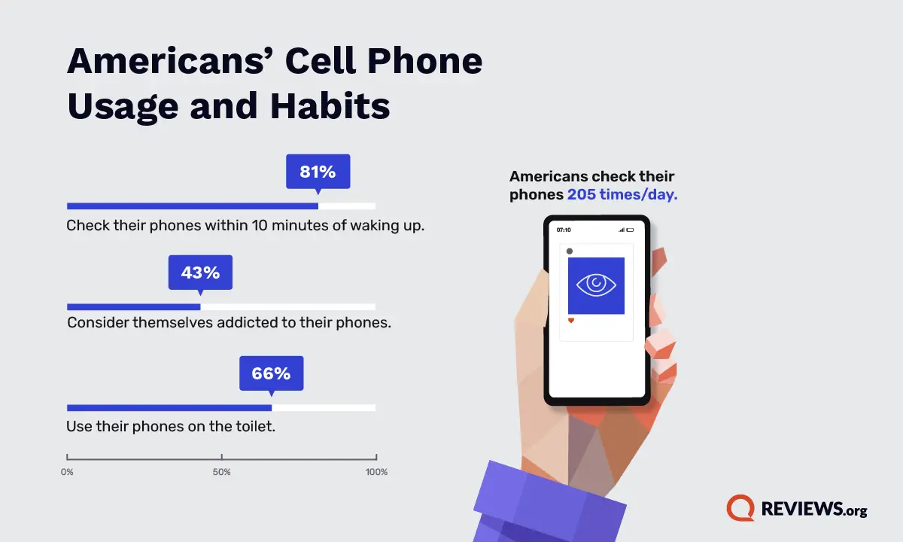
Smart phone usage globally rose 20.2% to 72.7% since 2010. [4].
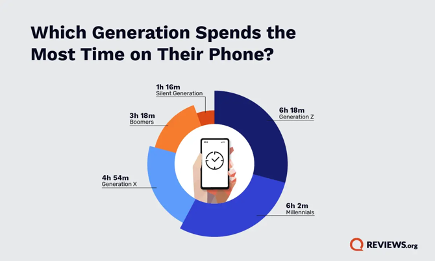
Average smartphone usage is 4h43min/day across ~5bn users [5].
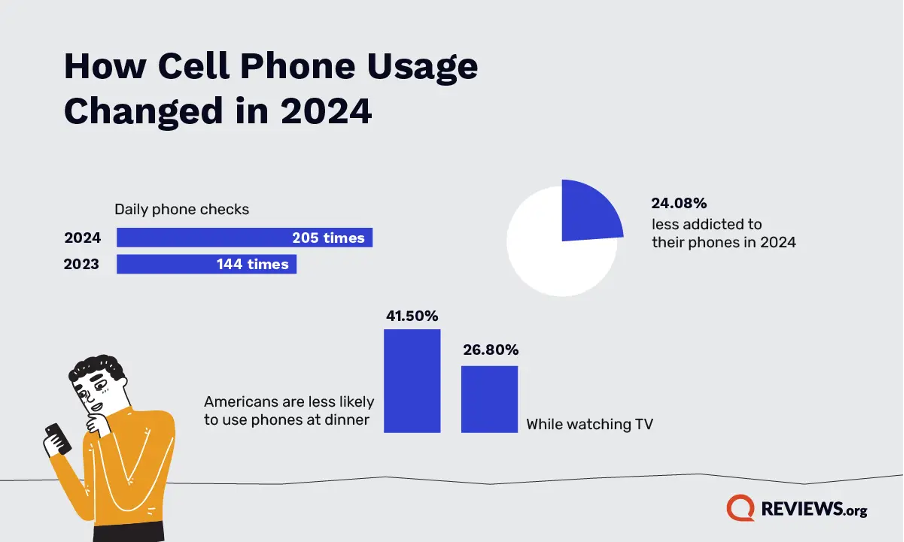
Phone pickups have increased from 46 checks/day to 157 checks [6].
49% of U.S. adults said they “frequently experience stress”, the highest in their trend to date (up ~16 percentage points over ~2 decades) [7].
57% of adults say they’d feel better if they got more sleep vs 43% in 2013 [8].
In the US, suicide rates have risen 40% over the last 2 decades [9].
Pedestrian deaths rose 77% from 2010 to 2021, while all other traffic fatalities rose 25% in the same period (caused by distracted driving) [10].
Our biological make-up
It is possible that reduced attention spans, rising depression rates, and reduced stress tolerance, are unrelated, and coincidental. But, sadly, they’re not. Multiple studies show these effects correlate with increased digital consumption and reward-seeking behaviour [11][12]. These trends are part of a far-reaching addiction epidemic aimed at hijacking our brain’s reward system through constant dopamine-driven reinforcement; a fight for which we are biologically unprepared [13][14].
Throughout our biological history we’ve lived in an age of scarcity, hunting, foraging, and conserving energy [15][16]. Our reward circuits evolved to search for calories, sugar, novelty, and social validation if and when it became available [17]. But, for the first time in human history, the average human is living in excess abundance with instant stimulation, highly calorific food, and seamless digital pleasure; a state which our brains are unable to control [18][19]. Fundamentally, our brains can’t handle this level of intense, and constant access to dopamine; and responds by downregulating reward sensitivity, driving compulsive use & craving [14][20] (more on the science later).
Primitive brains are no match for advanced ML
The reason we are unprepared is because our species has never faced neural-level persuasion systems engineered at maximising our consumption at the expense of our minds; an attack primarily executed by advanced machine learning. Modern social media algorithms are built on advanced ML recommender systems trained on our behavioural data to optimize engagement, retention, and time-on-device [21][22][23]. These systems deliver personalised experiences designed to keep us scrolling or send us notifications at opportune times, inadvertently training our brains to crave stimulation like Pavlov’s dog.
A plethora of academics have professed the dangers of AI with timely reminders that developing intelligence greater than ourselves risks humans losing control & autonomy. These warnings are often understood as literal dangers to physical safety akin to iRobot, but it’s the misalignment in goals between humans & AI that pose the greatest dangers. Nick Bostrom explains this eloquently in Superintelligence with his orthogonality thesis; intelligence (the ability to achieve goals) and goals (what a system aims for) are independent [24]. Take an AI paperclip manufacturer whose goal is to make as many paperclips as possible, resulting in a world full of paperclips and nothing else.
Applied here: Social media algorithms don’t need to understand you, only predict you. Their goal isn’t aligned for our flourishing, but solely our attention, consumption & engagement. This misalignment, repeated billions of times, manifests into a collective addiction causing a recursive loop of requiring further & further stimulus to satiate our dopamine receptors. This process is called reward stimulus adaptation, and is at the kernel of the issue of humans’ neuro-biological fight for freedom [20][14].
The war in our brains (Limbic vs Pre-frontal cortex).
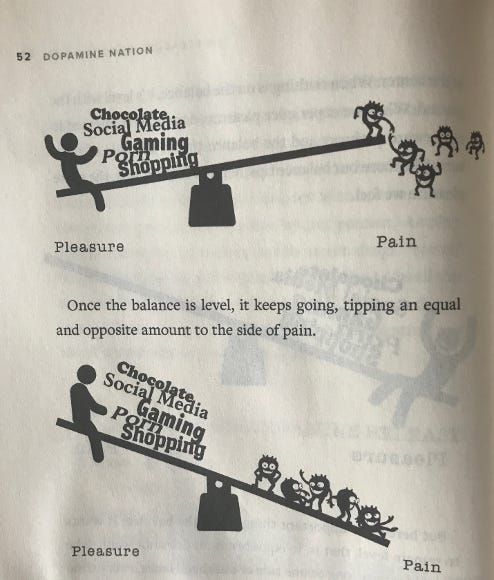
Every time we buy short-term digital stimulation, we’re taking away from our future enjoyment. Dr Anna Lembke explains this pattern (anhedonia) through a pleasure-pain balance: each dose of dopamine tips the seesaw to pleasure, and in our brain’s attempt to find balance (homeostasis), it compensates by pushing back to pain [14]. To maintain equilibrium, the brain reduces dopamine receptor availability, which creates dopamine down-regulation (pain). In a literal sense, our brain becomes less sensitive to feeling pleasure because there are fewer active dopamine receptors. This creates anhedonia, the inability to feel pleasure, which drives compulsive re-engagement, with the brain returning to behaviours it has learned to produce dopamine.
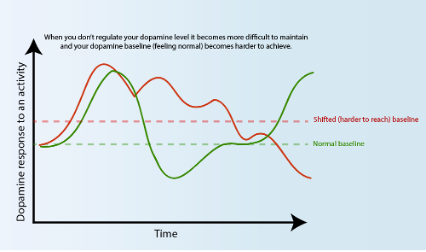
This is aptly visualised below, which shows how repeated high dopamine stimulation (in red) pushes the brain’s limbic system out of balance. Every spike reduces dopamine sensitivity until eventually the baseline to “feel normal” increases, meaning you need more and more stimulation just to feel normal; this is dopamine downregulation in action. Pleasure becomes harder to feel, motivation collapses, and normal life feels dull, depressing or anxiety inducing [14][25].
In contrast, the green line shows a healthy system with dopamine rising with enjoyable activities, then returning to baseline.
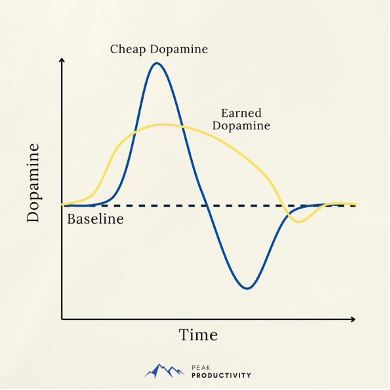
A major driver of this shift is the difference between earned and unearned dopamine releases in the brain. Reward from effort-based behaviours, exercise, learning, creativity, social connection produces a slower, longer sustainable rise with a less severe drop off [26]. In comparison, low effort digital rewards like scrolling, streaming, trigger faster, more aggressive dopamine spikes with stronger drops intensifying that ‘dull’ empty feeling that follows [27][28]. Each repetition strengthens the reinforcement loop: cue → craving → behaviour → reward → crash [29].
So every time you pick up your phone when you know you shouldn’t, stream that series in the background of every meal, check that notification, browse that site, you strengthen the recursive loop of dopamine-seeking behaviour. And not only that, you borrow from your future pain to enjoy your current happiness. The more cheap dopamine you consume, the less dopamine works, and the harder it is to feel normal without it.
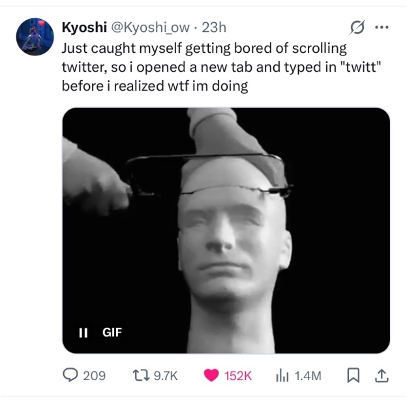
This process couldn’t be better captured in the tweet below, which I caught myself laughing at whilst writing this article. The fact this tweet is so popular indicates how much this topic resonates amongst so many people and as a society how we don’t understand it well enough.
Smartphones are drug-like
The similarities between drug addiction and other compulsive behaviours are stark; and not greatly appreciated enough as we walk through the day with the most powerful prediction machines in human history in our front pocket. They’re the first thing we check when we wake up, the object we rely on for work, to entertain ourselves, to keep up with our circle, and the rest of the world. But below is a stark comparison in the neurochemical similarities between taking drugs, and excessive smartphone usage (ESU).
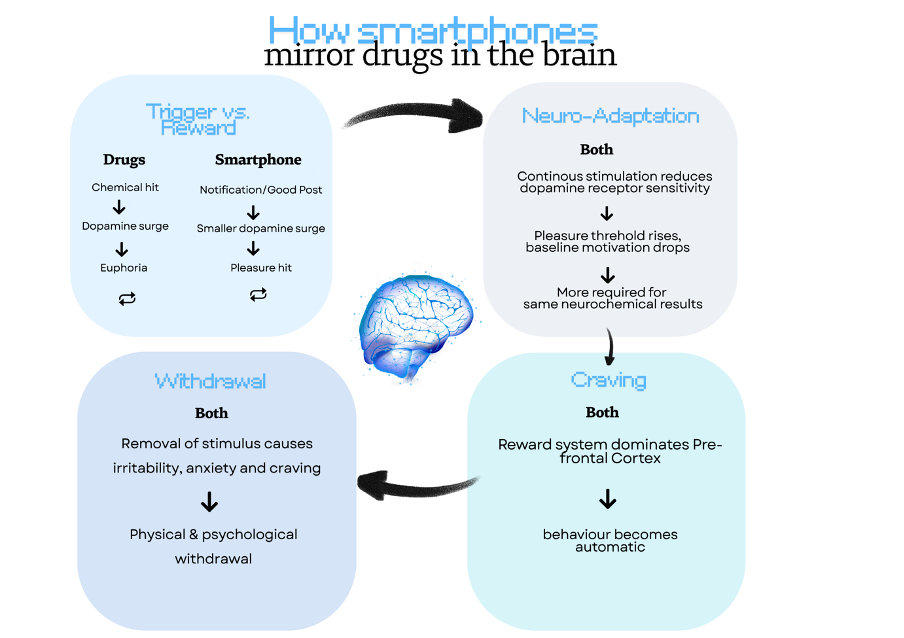
The process of addiction is near identical via anhedonia. The results are too, when dopamine is chronically suppressed in cases of addiction, motivation collapses entirely and the brain views effort-driven tasks as not worth it because the reward is too small compared to the immediate hit received by the drug of choice. This is partly how smart-phone addiction can destroy our lives.
Nothing displays this so vividly as the well-known addiction study where rats given extended access to cocaine will choose it over food and water, to the point of starvation and death [30][31]. The dopamine deficit was so severe, that survival behaviour no longer produced sufficient reward much akin to the addiction in several forms including smartphone’s that humans suffer from today. Our own interest are collapsing in front of our eyes.
Choosing your path: Red pill or Blue pill
I’m going to keep this simple. The end-game here is that we’re living in an increasingly distracted society, with higher levels of unhappiness, anxiety & depression with lower levels of productivity, stress tolernace & attention.
Path 1
We continue sleep-walking into the digital world designed to harvest human attention, with Operating Systems as the portal, apps the operators, AI the fine-tuner, and users the product. One of my favourite films, The Matrix, imagines a world where AI farms human bodies for energy; metaphorically we’re already there with our time, focus, and emotional energy being harvested at scale by big tech. Every swipe, notification is a microdose of dopamine whose sole purpose is to keep us ‘plugged in’. This is the path where humans become digital batteries as fuel for algo’s & corporate profit in an ever dystopian timeline.
Path 2
The anti-movement. The people who understand this new war is about attention, agency, self-mastery will be the only ones to escape. Those who don’t understand that a war has begun, have lost by default. The anti-movement is simple:
Do hard things that your brain resists
Do ‘boring’ things that your brain resents
Don’t engage in apps that numb you
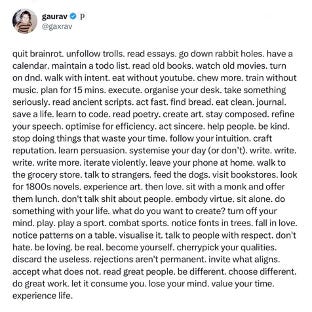
Go on that run, don’t watch movies whilst eating, finish reading that chapter, don’t pick up your phone, don’t use that app, defy the impulses your brain has built unhealthy pathways for. Studies suggest 60 days of this is enough to re-shape those neural pathways into different ones [32].
This tweet is a brilliant way to articulate this.
https://x.com/gaxrav/status/1846226808112353597
Some practical tools to help in the battle
Opal is a useful app, set times where you can use specific apps. This helps you find triggers, and you’ll notice in the first week how often you pick up your phone.
Red light your phone 2 hours before bed, ideally don’t use it, particularly any social media apps. But red-light helps reduce stimulation before sleeping, check youtube for tutorials, it takes 2 mins.
Don’t sleep in the same room in your phone and don’t check it within an hour of waking up.
Grayscale your phone during the day, this reduces the visual stimulus and makes it less appealing to use more generally.
When you’re working, put your phone in a place like a safe that requires work to go & retrieve. A phone being in sight reduces productivity significantly. I actually put mine in the oven, don’t judge me.
Meditation - Practise the art of mindfulness. Spend 20/30 minutes thinking about nothing. One fun thing I like to do is think in full sentences whilst meditating, it’s weird but slows your brain down.
Reading - Understanding more about this will change your perspective. I highly recommend Dr Anna Lembke’s dopamine nation, and her podcast on Diary of a CEO. She’s underrated.
References
1. Naval Ravikant quote on “the modern devil (twitter).
2. Mark, G. (2023). Attention span decline data.
3. Gallup polling on current depression rates (2015–2023).
4. Global smartphone adoption statistics.
5. Statista. Average smartphone usage per day globally.
6. Phone pickup frequency studies.
7. Gallup. U.S. adults reporting frequent stress (2023).
8. Gallup. Adults reporting lack of sleep (2013–2023).
9. U.S. suicide rate increase over two decades.
10. Governors Highway Safety Association (GHSA). Pedestrian deaths and distracted driving.
11. Twenge et al. (2018). Digital consumption correlations with mental health.
12. Mark, G. (2023). Digital behaviour research.
13. Volkow et al. (2017). Dopamine and addiction neurobiology.
14. Lembke, A. (2021). Dopamine Nation; dopamine downregulation and anhedonia.
15. Lieberman, D. (2013). Human evolutionary biology.
16. Wrangham, R. (2009). Evolutionary anthropology and human development.
17. Berridge & Robinson (2016). Reward circuitry research.
18. Todd Rose (2019). Effects of abundance and instant gratification.
19. Barret (2017). Emotional brain research.
20. Volkow & Boyle (2018). Reward stimulus adaptation.
21. Zhou et al. (2018). ML recommender system design.
22. Covington et al. (2016). YouTube recommendation algorithm.
23. Meta AI (2021). FB/IG recommendation systems.
24. Bostrom, N. Superintelligence. Orthogonality thesis.
25. Robinson & Berridge (2008). Dopamine sensitization and motivation.
26. Salamone & Correa (2012). Effort-based reward pathways.
27. Montag et al. (2019). ESU and dopamine.
28. Andreassen et al. (2016). Compulsive smartphone usage research.
29. Eyal, N. (2014). Hooked: habit loops and digital addiction.
30. Bozarth & Wise (1985). Cocaine self-administration in rats.
31. Ahmed & Koob (1998). Compulsive drug seeking and starvation study.
32. Lally et al. (2009). Behavioural change and habit formation timeline.